What to Do After a Car Accident in Charlotte: A Honest Guide for People Who Are Overwhelmed Right Now
If you just got into a car accident, you’re probably reading this on your phone with shaking hands, a headache, or both. Maybe you’re still at the scene. Maybe you’re home but can’t sleep. Either way, you’re trying to figure out what happens next and whether you’re going to be okay.
This guide is for you. Not for lawyers. Not for insurance companies. For the person who got hit by someone else and is trying to understand what they’re entitled to and what they need to do before they make a mistake that costs them.
Let’s go through it clearly.
First – Are You Actually Injured?
This sounds obvious but it isn’t.
Some of the most serious injuries from car accidents don’t hurt right away. Adrenaline is remarkable at masking pain. Whiplash, soft tissue damage, traumatic brain injuries, and even internal bleeding can take hours or days to fully surface. You may feel shaken but fine at the scene and wake up the next morning barely able to move your neck.
This matters legally because the gap between your accident and your first medical visit gets used against you. Insurance adjusters will argue that if you were really hurt, you would have gone to the doctor immediately. They do this routinely. Don’t give them that argument.
Even if you feel okay right now, get evaluated. Go to an urgent care, an ER, or your primary care doctor. Tell them you were in a car accident and describe everything you feel, even if it seems minor. That visit creates a medical record that directly connects your injuries to the collision – and that connection becomes one of the most important pieces of evidence in your claim.
What to Do at the Scene If You Haven’t Left Yet
If you’re still at the scene or just left, here’s what matters most.
Call the police. Always. Even for accidents that seem minor. A police report is an official, third-party account of what happened and it often includes the responding officer’s assessment of fault. In North Carolina that document carries real weight.
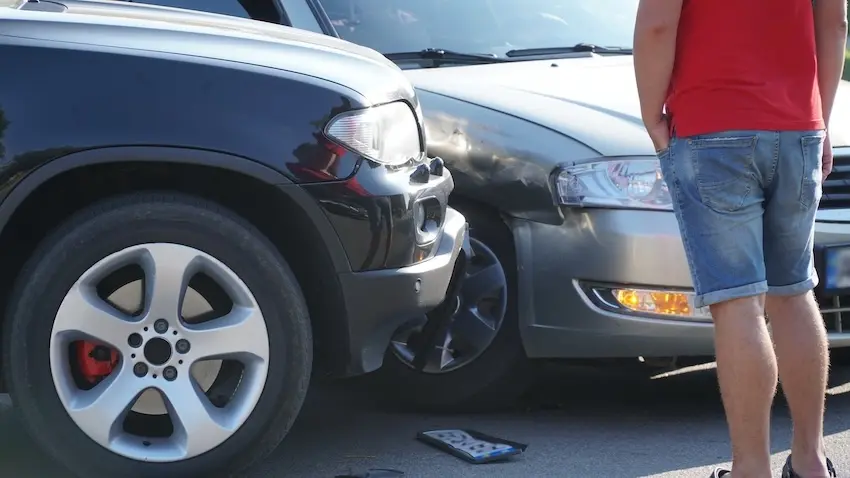
Document everything you can. Use your phone. Photograph the damage to every vehicle involved, the road conditions, any skid marks, traffic signals, the position of the cars, and any visible injuries on yourself. If there are witnesses, get their names and phone numbers before they leave.
Exchange information with the other driver – insurance, license plate, driver’s license, and contact details. Be polite but don’t discuss fault. Don’t say sorry. Don’t speculate about what happened. Anything you say at the scene can be used later to shift blame onto you, and in North Carolina that matters more than almost anywhere else in the country.
Why North Carolina’s Laws Make Your Case Uniquely High Stakes
Here’s something most people outside the legal world don’t know.
North Carolina follows a legal doctrine called contributory negligence. Most states use comparative negligence, which means even if you were partially at fault for an accident you can still recover compensation proportional to the other driver’s share of blame.
North Carolina is different. Under contributory negligence, if you are found to be even one percent at fault for the collision, you can be completely barred from recovering anything. Not a reduced amount. Nothing.
Insurance companies know this and they use it aggressively. Their adjusters are trained to find any detail – any statement you made at the scene, any traffic law you may have technically violated, any way to suggest you contributed to what happened – and use it to eliminate your claim entirely.
This is why what you say, what you document, and how quickly you get legal representation matters so much in North Carolina. The margin for error is genuinely zero. If you were hurt in a collision here, talking to a Charlotte car accident lawyer as early as possible is not just good advice – it is how you protect yourself from a legal standard designed to work against you.

The Conversation with Your Insurance Company
Your insurance company is going to call you. Possibly very soon. And they are going to ask you questions.
Be careful.
This is not about being dishonest. It’s about understanding that adjusters – even from your own insurance company – are trained to identify statements that can later reduce what you’re owed. Recorded statements taken in the hours or days after an accident, when you’re stressed and still unclear on the full extent of your injuries, have a way of coming back to cause problems.
Stick to basic facts. The date, the location, that there was an accident. Don’t speculate about your injuries or their severity. Don’t guess about fault. Don’t accept any settlement offer – even a seemingly generous one – before you fully understand your injuries, because once you accept you waive your right to come back for more.
If the other driver’s insurance company contacts you, you are under no obligation to speak with them at all before consulting an attorney.
What You Can Actually Recover Compensation For
People are often surprised by the full scope of what a personal injury claim can cover. It’s not just the car repair and the emergency room bill.
North Carolina law allows accident victims to recover economic damages – the tangible financial losses with clear dollar amounts. These include every medical expense related to the accident from the initial ER visit through ongoing physical therapy and any future care your injuries require, lost wages for every day of work you missed during recovery, reduced earning capacity if your injuries affect your ability to do your job long term, and the full cost of repairing or replacing your vehicle and any personal property damaged in the crash.
Beyond that, North Carolina law also recognizes non-economic damages – the losses that don’t come with a receipt but are very real. Physical pain and ongoing discomfort. Emotional distress, anxiety, and trauma that follows you home from the accident. Loss of enjoyment of life when injuries prevent you from doing things that matter to you. Permanent disability or disfigurement that changes how you move through the world.
In cases involving drunk driving or especially reckless behavior, courts may also award punitive damages – not to compensate you, but to punish the wrongdoer.
Understanding the full picture of what you’re entitled to is one of the most important reasons to talk to an attorney before settling anything.
How Long Do You Have to File?
In most North Carolina car accident cases, you have three years from the date of the collision to file a personal injury lawsuit. That might sound like a long time, but waiting creates real problems.
Witnesses move and forget. Physical evidence disappears. Your own recollection of details fades. And insurance companies treat delayed claims as a signal that your injuries weren’t serious – which they will absolutely use against you.
There’s also a shorter deadline most people don’t know about. If your accident involved a government vehicle or happened on government property, you may be required to file a formal notice with the relevant government entity within six months to a year. Missing that window can permanently close your case regardless of how strong it is.
The short version: don’t wait.
What If the Other Driver Has No Insurance?
It happens more than it should. North Carolina requires all drivers to carry liability insurance but plenty of people drive without it.
If you’re hit by an uninsured driver, your own auto insurance policy may provide coverage through what’s called uninsured motorist coverage. North Carolina law requires insurers to offer this coverage, and many policies include it automatically unless you specifically decline it in writing. If you have it, you can file a claim with your own insurer for medical expenses, lost wages, and pain and suffering up to your policy limits.
The complication is that filing against your own insurance company puts you in an odd position – you’re technically making a claim against people you pay every month, and they’re not always eager to pay out. Having someone who understands how these claims work is especially valuable here.

When Should You Talk to a Lawyer?
Sooner than you think.
You don’t need to have everything figured out. You don’t need to know whether you’re going to sue anyone. You don’t even need to know exactly how hurt you are yet.
What you do need is someone in your corner who understands how these claims work before you make any decisions that can’t be undone. Accepting a settlement offer. Giving a recorded statement. Missing a deadline. These are the mistakes that hurt people, and they’re almost always made in the first few days when everything still feels chaotic.
At Panchenko Law Firm, we offer free consultations specifically because we know the last thing you need right now is another financial decision to make. You talk to us, we listen, we tell you honestly what your situation looks like and what your options are. No obligation. No pressure.
If you decide to move forward, we work on a contingency fee basis – you pay nothing unless we recover compensation for you. Our attorneys Dmitriy Panchenko and Andrew Deschler, along with our multilingual team, have helped hundreds of Charlotte accident victims navigate this process and come out the other side with the compensation they deserved.
You don’t have to figure this out alone tonight.
Call us at (704) 900-7675, tell us what happened, or take a moment to learn more about who we are and how we work. We’re available 24/7 and we’re ready to help you understand where you stand.
About Panchenko Law Firm
Panchenko Law Firm is a trusted personal injury law firm serving Charlotte, NC and surrounding communities. Led by experienced attorneys Dmitriy Panchenko and Andrew Deschler, our firm specializes in car accident cases and other personal injury claims. We provide compassionate, results-driven representation with multilingual support for our diverse client community. With a proven track record of recovering millions in compensation for injured clients, we’re dedicated to protecting your rights and fighting for the justice you deserve. Contact us 24/7 for a free consultation.