Underride Truck Accidents in Charlotte
Charlotte’s highways carry some of the heaviest truck traffic in the Southeast. Thousands of tractor-trailers travel I-77, I-85, and I-485 alongside families, commuters, and students. Most of these trips end safely, but when a passenger car slides beneath the back or side of a large truck, the results are often catastrophic. These collisions are among the deadliest accidents on the road.
Many truck underride crashes are preventable, which makes them all the more tragic for the families left behind. In this post, our Charlotte truck accident lawyers at Panchenko Law Firm explain why these crashes are so dangerous, what typically causes them, and who may be legally responsible. Our Charlotte truck accident lawyers at Panchenko Law Firm have seen the devastating impact these collisions can have.
Why Truck Underride Crashes Are So Dangerous
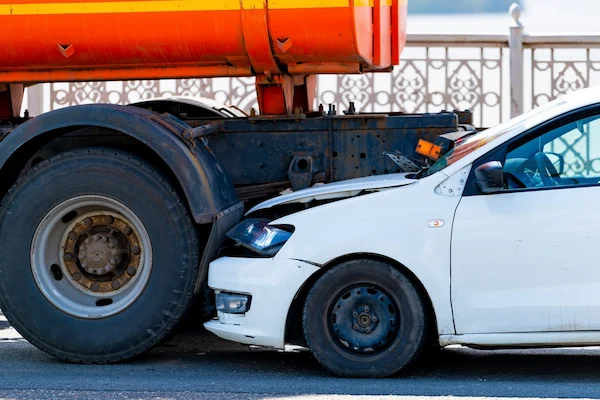
Tractor-trailers and passenger vehicles are built very differently. The bottom edge of a typical trailer sits about 4 feet off the ground, which lines up with the hood and windshield of most cars. When a car strikes the back or side of a trailer, there is often nothing at bumper level to stop it. Instead, the car keeps moving forward and slides underneath.
This height gap defeats the safety features that normally protect drivers and passengers. Modern cars have crumple zones in the front that absorb crash energy, along with airbags that deploy when sensors detect an impact. In truck underride crashes, the point of contact is often the windshield or roof pillars. The trailer often pushes directly into the space where people are sitting.
The consequences are severe. Victims often suffer traumatic brain injuries, spinal cord damage, broken bones, and fatal head and neck trauma. Truck underride crashes can be deadly even at speeds of 30 to 40 miles per hour.
Common Causes of Underride Truck Accidents
Most truck underride crashes result from a preventable mistake, equipment failures, or unsafe road conditions. Understanding the most common causes can help victims and families recognize when someone else’s carelessness played a role.
- Sudden Braking: When a truck driver brakes hard without warning, the vehicle behind may not have enough time or distance to stop. The risk increases when a truck’s brake lights are broken, dirty, or not working.
- Incorrect Turns: Tractor-trailers need extra room to turn. When a driver makes a wide right turn or a U-turn across multiple lanes, the trailer’s long side can block traffic and leave oncoming cars nowhere to go.
- Defective Underride Guards: Rear guards are designed to stop a car from sliding under a trailer. Weak, rusted, poorly welded, or damaged guards can bend or collapse on impact and fail to protect anyone.
- Poor Visibility: Darkness, rain, and fog make trailers harder to see. Missing or dirty reflective tape, burned-out lights, and dark-colored trailers can leave drivers with little warning that a truck is ahead or crossing the road.
- Truck Driver Negligence: Fatigue, distracted driving, speeding, drug or alcohol use, and unsafe lane changes all increase the chance of a crash. Truck drivers are held to high safety standards because of commercial vehicle size.
- Illegal or Unsafe Parking: Trucks parked on road shoulders, exit ramps, or other unsafe spots are a serious hazard, especially at night. The danger grows when drivers fail to use hazard lights or set out warning triangles.
Federal Safety Rules for Underride Guards on Trucks
Federal law requires most tractor-trailers to have rear impact guards, sometimes called “Mansfield bars.” In 2022, federal regulators adopted stronger standards for rear guards on new trailers. Congress also passed the Infrastructure Investment and Jobs Act in 2021, which called for annual inspections and further research into side underride protection.
However, side underride guards are not federally required, even though a significant share of truck underride crashes involve side impacts. This leaves drivers exposed when a trailer turns or crosses the road in front of them.
These rules matter in a legal claim. If a guard did not meet federal standards, or if a company skipped required inspections, that failure can serve as strong evidence of liability.
Who Can Be Responsible for Truck Underride Crashes
After a serious truck crash, many people assume only the truck driver is at fault. In reality, truck underride crashes often involve several parties whose decisions contributed to the collision. A thorough investigation may reveal failures by a trucking company, a manufacturer, a repair shop, or others. Identifying every responsible party is important because it can affect how much compensation is available to cover medical bills, lost income, and other losses.
The Trucking Company
Trucking companies have a legal duty to operate safely and keep their fleets in good condition. A company may be held responsible if it hired a driver with a poor safety record, failed to provide proper training, or did not adequately supervise drivers. Some companies pressure drivers to meet tight delivery deadlines, which can lead to speeding, fatigue, and violations of federal hours-of-service rules.
Maintenance is another key issue. Carriers must regularly inspect and repair rear guards, brake lights, and reflective tape. When a company ignores worn or broken equipment, it can directly contribute to truck underride crashes.
Under a legal principle called vicarious liability, a trucking company can often be held responsible for the negligent actions of a driver who was working on its behalf at the time of the crash.
The Truck Driver
A truck driver may be held responsible for causing a crash by driving while fatigued, texting or using a phone, speeding, or operating the truck under the influence of drugs or alcohol. Unsafe maneuvers, such as wide turns across traffic, abrupt lane changes, or sudden stops without cause, can also leave other drivers with no way to avoid the trailer.
Drivers should perform pre-trip inspections. Skipping this step can mean driving with broken lights, damaged guards, or other hazards that go unnoticed. Evidence such as electronic logging device data, phone records, and witness statements can help show what the driver was doing before the crash.
The Truck or Trailer Manufacturer
Some truck underride crashes happen because a rear guard was poorly designed, made from weak materials, or attached with faulty welds or bolts. A guard that bends or breaks on impact cannot stop a car from sliding underneath, even in a moderate-speed collision.
When a design or manufacturing defect contributes to a crash, the manufacturer may be held liable. These cases often require engineering experts who can examine the guard, compare it to federal standards and industry practices, and explain how a safer design could have prevented or reduced the victim’s injuries.
Third-Party Maintenance and Cargo Companies
Many trucking companies rely on outside businesses to repair equipment and load freight. A maintenance shop may be responsible if it improperly repaired or reattached a rear guard, failed to fix broken lights, or signed off on an inspection without catching obvious damage.
Cargo companies can also play a role. When freight is loaded unevenly or exceeds weight limits, it can affect how a truck brakes and handles, making sudden stops and jackknife situations more likely.
Because these companies often operate behind the scenes, their involvement may not be obvious at first. Reviewing repair invoices, inspection reports, and shipping records can reveal whether a third party shares the blame.
How Our Charlotte Truck Accident Lawyers Fight for Clients
At Panchenko Law Firm, we move quickly to protect the evidence in truck underride crashes. Trucking companies often send their own investigators to the scene within hours, so we act fast to preserve critical information. This can include black box and electronic logging device data, driver logs, maintenance and inspection records, and dashcam footage.
When needed, our legal team works with accident reconstruction and engineering experts to show exactly how the crash happened. We focus on holding every responsible party accountable. We look beyond the driver to examine the trucking company, manufacturers, maintenance providers, and cargo companies.
Our truck accident attorneys fight for the full compensation clients deserve. That may include medical expenses, future care costs, lost wages, pain and suffering, and, in fatal cases, wrongful death damages for surviving family members. We handle communications with insurance companies so you and your loved ones can focus on healing.
Contact Panchenko Law Firm for a Free Case Review
If you or someone you love was hurt in an underride collision in Charlotte, or if you lost a family member in one of these tragic crashes, you do not have to face the aftermath alone. The team at Panchenko Law Firm is ready to listen to your story, answer your questions, and explain your legal options.
We work on a contingency fee basis, meaning you pay no attorneys’ fees unless our lawyers secure compensation for you. Contact us online or call (704) 900-7675 to schedule a free, no-obligation case review.